If you have spent any time searching for Hindi nursery rhymes on YouTube, you will have noticed something: it is the same ten songs, over and over, with varying degrees of generic CGI. Machli Jal Ki Rani with slightly different fish. Chanda Mama with slightly shinier moonlight. Johny Johny with slightly smoother faces. The classics are endlessly recycled — and after years of watching the same content, Indian parents and toddlers alike have quietly started to disengage.
Qissa was built on a different premise. Most of our animated videos are completely original — new songs, new stories, new characters, written and composed from scratch. Not remakes. Not re-skins. New.
The Problem With Recycled Hindi Children’s Content
Indian nursery rhyme content has been largely frozen for two to three decades. The same pool of 15 or so classic balgeet has been animated, re-animated, and re-re-animated by hundreds of channels. The visual quality has improved incrementally. The music has not. The storytelling certainly has not.
The result is that the average toddler who watches Hindi rhymes on YouTube today is consuming stories that were written in the 1950s or earlier, set to melodies that have not meaningfully evolved, packaged with animation that prioritises speed of production over quality of craft.
None of this is a criticism of the original balgeet — Chanda Mama Door Ke and Machli Jal Ki Rani are genuinely beautiful songs. The problem is that they have become the entire conversation. Indian children’s music in 2026 is still largely the same content it was in 1996, just with a slightly higher polygon count.
We think children deserve more than that.
What Original Actually Means at Qissa
When we say our rhymes are original, we mean the story, the characters, the lyrics, and the music are all new — created by the Qissa team, not derived from existing songs.
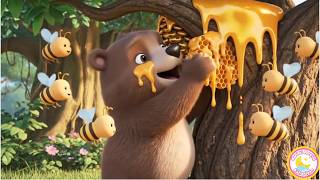
Bhalu Babu Dhamaal — Bhalu Babu did not exist before we wrote him. He is a bear who loves honey, dances with the moon, and throws jungle parties. The song, its rhythm, its lyrics, and its melody are entirely original. It targets the same toddler attention that Ek Mota Hathi does — an animal character doing fun things — but it is a brand new story told in a brand new voice.
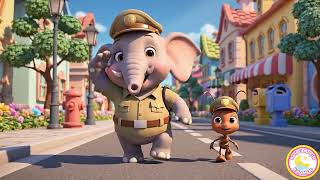
Haathi Aur Chinti Police Song — An elephant and an ant working as police partners to catch a thief. This is a fully original narrative with characters, a problem, escalating tension, and a resolution built on teamwork. Nothing in the classic balgeet canon comes close to this kind of story structure for toddlers. The Left Right Left Right rhythm is original; the police partnership concept is original; the message — that big and small can achieve together what neither can alone — is intentional.
Zup Zup Bhagi Machli — Parents who see this for the first time often assume it is a retelling of Machli Jal Ki Rani. It is not. Nanhi-Munni fish lives in the sea, encounters a terrifying shark, is rescued by Kachua Mama (Turtle Uncle) who hides her inside his stone shell, and eventually escapes to safety. It is a proper adventure story with danger, helpers, courage, and a happy ending — set to an original driving melody that is nothing like the two-line classic.
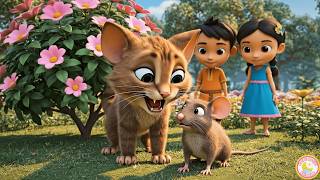
Billi Chuhe Ki Kahani — A cat chases a mouse. The mouse is faster and cleverer. One stormy night both get drenched. Cold, wet, and miserable, they find shelter together and discover they actually like each other. They become best friends. This is original storytelling that happens to be set in a rhyme — with a genuine arc, genuine character development, and a message about unlikely friendship that a three-year-old can understand and feel.
Nani Meri Chidiya Ko — A grandmother’s small brown bird receives colourful wings — red, yellow, blue, green — in a magical transformation. Original story, original song, a celebration of colour vocabulary wrapped in a grandmother-grandchild relationship that resonates across Indian families everywhere.
Aao Bachchon Train Chalayen — Children, a monkey, and a bear run a train together. Original characters, original song, an original concept that teaches transport vocabulary, stop-and-go concepts, and cooperative play — all at once, in under three minutes.
Chanda Mama Aao Na — Do not confuse this with the classic Chanda Mama Door Ke. This is an original composition — a new moon lullaby with its own melody, its own lyrics, and its own invitation: the moon is asked to come down from the sky and play in the garden with the child. The imagery is rooted in the same cultural warmth as the classic, but the song itself is entirely new.
Where We Animate a Classic
One of our eight animated videos is based on a classic balgeet.
Nani Teri Morni is a generational classic that Indian families have sung for decades. We animated it because it is one of the most culturally resonant Hindi songs for Indian children — the kind that grandparents immediately recognise and sing along to. Our animated version treats it with the care and production quality that the song deserves.
This is the only video in our current catalogue built around an existing song. The other seven are original compositions — new music, new stories, new characters created by the Qissa team.
Why Original Content Matters for Your Child
Freshness for parents. The most underrated benefit of original content is that parents can survive hearing it. After the four-hundredth play of Machli Jal Ki Rani, the joy has a way of fading for the adult in the room. A new song stays interesting longer — which means a parent is more likely to sing along, engage, and create the kind of warm, connected experience that makes language learning actually work.
Richer storytelling for toddlers. Classic balgeet are often short and imagistic — a fish in water, a moon cooking treats, a wooden horse galloping. Original stories like Haathi Chinti Police and Billi Chuhe Ki Kahani have narrative arcs. A toddler who watches these is not just absorbing vocabulary — they are learning story structure, character motivation, and cause-and-effect. These are genuinely educational gains that simple lyric rhymes do not deliver.
New vocabulary, new concepts. Classic balgeet cover a specific vocabulary: moon, water, fish, horse, train, grandmother. Qissa originals extend into teamwork, courage, friendship, colour, and adventure. The breadth of vocabulary exposure matters for language development.
Cultural authenticity without cultural stagnation. Indian children’s culture is not a museum exhibit. It should evolve. Original Hindi songs for children — rooted in Indian values, Indian relationships, Indian aesthetics — that reflect the creativity and ambition of modern Indian storytellers are not a departure from tradition. They are tradition continuing.
All eight animated videos — seven original compositions and one classic balgeet done right — are at qissa.in/videos. The lyrics, Hinglish text, and English meanings for all 66 rhymes are in the library. We hope you and your toddler find something worth singing.