The best Hindi nursery rhymes for 2-year-olds combine simple vocabulary, a strong beat, and satisfying repetition. Rhymes like Chanda Mama Door Ke, Machli Jal Ki Rani, and Nani Teri Morni have been sung to Indian toddlers for generations because they work — they are short, singable, and full of the sounds that young ears love most.
At 2 years old, a child’s brain is wired for language through music. Melody and rhythm act as a scaffold, helping toddlers absorb new words and sounds long before they can fully articulate them. Hindi rhymes give bilingual families a joyful, low-pressure way to pass on the language — no grammar lessons required. Even ten minutes of singing at bedtime or bathtime is enough to build early Hindi recognition.
For Indian diaspora families raising children in the UK, US, or UAE, the challenge is real: English is everywhere, and Hindi often feels like it has to compete. Hindi nursery rhymes bridge that gap. They connect children to grandparents, to holidays in India, and to a cultural identity that no classroom can teach. The music makes it personal.
Why Hindi Rhymes Are Perfect for 2-Year-Olds
Two-year-olds are at a critical window for language development. Their brains are building neural pathways for every sound they hear, and they learn best through repetition and emotional connection — both of which nursery rhymes deliver naturally.
A rhyme like Aloo Kachaloo or Lalla Lalla Lori uses the same sounds and phrases over and over, which helps toddlers predict what comes next. That sense of anticipation and reward is deeply satisfying for young learners. Hindi rhymes also tend to use concrete nouns — moon (chanda), fish (machli), bird (chidiya), elephant (hathi) — which makes them easy for toddlers to picture and remember.
The best Hindi balgeet for toddlers are also short. Most classic rhymes run under two minutes, which is exactly the right length for a 2-year-old’s attention span. You can loop them, remix them, and make them part of daily rituals — the bath, the car, the bedtime routine — without anyone getting bored.
10 Best Hindi Nursery Rhymes for 2-Year-Olds
1. Chanda Mama Door Ke (Chanda mama door ke, poova pakaye ghur ke)
This gentle moon lullaby is perhaps the most beloved Hindi nursery rhyme ever written. Its slow, rocking rhythm makes it perfect for bedtime. The image of the moon cooking sweet poova for the child is warm and universally comforting. Read the full lyrics →
2. Machli Jal Ki Rani Hai (Machli jal ki rani hai, jeevan uska paani hai)
Short, fast, and rhythmically satisfying, this rhyme about a fish teaches toddlers about nature without them realising it. The two-line structure makes it easy to memorise in a single sitting. Read with Hinglish lyrics →
3. Nani Teri Morni Ko Mor Le Gaye (Nani teri morni ko mor le gaye)
This classic about Nani’s beloved peacock tells a simple story — something stolen, something chased — which toddlers find endlessly engaging. At under two minutes, it holds attention perfectly. Watch the animated video →
4. Lakdi Ki Kathi (Lakdi ki kathi, kathi pe ghoda)
With its galloping rhythm and playful imagery of a wooden horse, this rhyme gets toddlers moving. Clapping and bouncing along is almost irresistible. It is a natural first song for active 2-year-olds who cannot sit still. Read the lyrics →
5. Aloo Kachaloo Beta Kahan Gaye The (Aloo kachaloo beta, kahan gaye the?)
This call-and-response rhyme teaches conversational Hindi through playful repetition. The potato and yam characters — aloo and kachaloo — have become such cultural icons that most Indian parents know every line by heart. Read Aloo Kachaloo lyrics →
6. Lalla Lalla Lori (Lalla lalla lori, doodh ki katori)
A traditional lullaby sung by grandmothers across North India for centuries. It is soothing, minimal, and perfect for settling a restless 2-year-old. The milk bowl imagery (doodh ki katori) connects the song to warmth and safety. Read Lalla Lalla Lori →
7. Hathi Raja Kahan Chale (Hathi raja kahan chale, haath mein le ke chadi-chale)
Children love elephants, and this rhyme about a majestic elephant king walking through town is full of visual energy. It introduces basic Hindi nouns and encourages toddlers to walk like an elephant — equal parts language learning and exercise. Read the lyrics →
8. Nani Meri Chidiya Ko (Nani meri chidiya ko, rang de re)
A magical song about a grandmother’s bird receiving colourful wings. Perfect for expanding colour vocabulary in Hindi — laal, peela, neela — while honouring the grandmother-grandchild bond central to Indian family life. Watch the video →
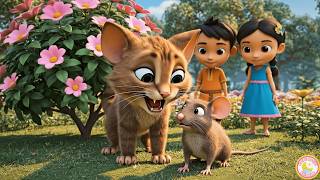
9. Billi Chuhe Ki Kahani (Billi chuhe ki kahani sunno re)
This animated cat-and-mouse story is a firm favourite with toddlers. The chase, the tricks, and the unlikely friendship at the end make it a proper mini-story rather than just a rhyme — great for early narrative comprehension. Watch the animated video →
10. Chanda Mama Aao Na (Chanda mama, aao na, baagon mein khelo na)
A more upbeat take on the moon theme, this rhyme invites the moon to come down and play in the garden. It is more interactive than the traditional Chanda Mama Door Ke and works beautifully for daytime singing and clapping games. Watch Chanda Mama Aao Na →
Tips for Singing With Your Toddler
1. Repetition is not boring — it is the point. Young children love hearing the same rhyme ten times in a row. Each repetition builds familiarity and reinforces Hindi sounds and vocabulary. Lean into it rather than rushing to new songs.
2. Use actions and movements. Most Hindi nursery rhymes lend themselves to clapping, bouncing, or pointing at things around the room. Physical movement helps cement the words in a toddler’s memory and makes rhyme time feel like play, not learning.
3. Sing little and often. A rhyme sung quietly during the bath every evening will become part of your child’s identity. Consistency matters far more than volume or performance quality.
4. Do not worry about your Hindi pronunciation. If you are more comfortable with the Hinglish transliteration, use it. The goal is connection and joy — not perfection. Toddlers do not judge; they absorb. Qissa’s bilingual lyrics exist precisely for this reason.
5. Let grandparents sing too. Video calls with grandparents in India become so much richer when the child recognises a rhyme from both sides of the call. Sharing Chanda Mama with Nani over a video call is the kind of small moment that becomes a lasting memory.
Start Singing Today
Hindi nursery rhymes are one of the most effortless gifts you can give a 2-year-old. They are free, screen-time-optional, and carry centuries of cultural warmth in just a few verses. Every rhyme your child learns is a thread connecting them to family, language, and a heritage that no textbook can teach.
All ten rhymes above — and over fifty more — are available in Qissa’s rhyme library with bilingual lyrics, Hinglish sing-along text, animated videos, and free printable activity sheets. Browse the library, find your little one’s favourites, and start singing together tonight.